The knowledge behind the sound
Why 440? And why not?
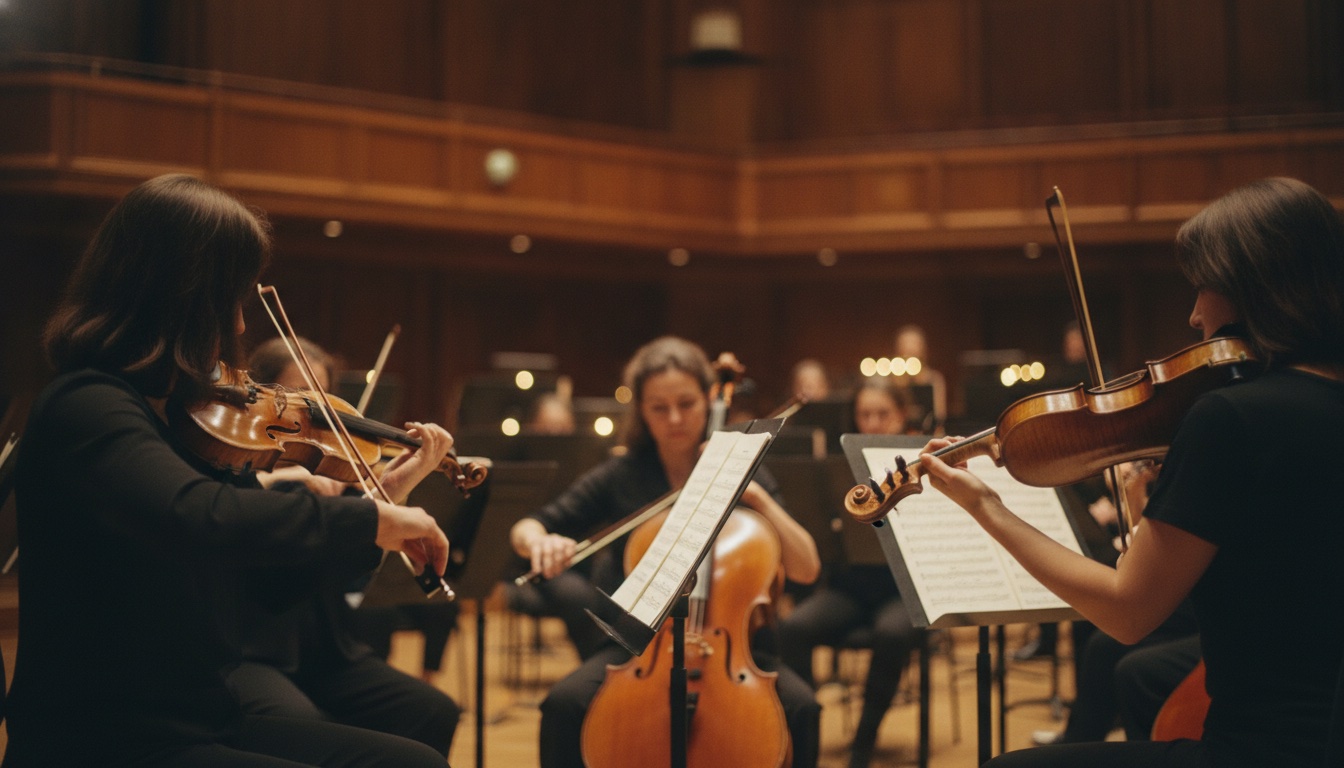
For an orchestra to sound together, everyone agrees on one reference tone — concert pitch. Today it sits at 440 hertz. That is not a law of nature but an agreement: adopted at an international conference in London in 1939, taken up as an ISO recommendation in 1955, and written down as the standard ISO 16 in 1975.
432 Hz is the concert pitch Radio 432 is set to by default. It sits about 32 Cents measure small pitch differences: 100 cents make a semitone, 1 cent is barely audible. More about cents → below concert pitch A = 440 Hz — just under a third of a semitone. Every note drops evenly; the music stays the same, only a touch lower.
What is measurable is exactly that: the pitch, the distance in Cents measure small pitch differences: 100 cents make a semitone, 1 cent is barely audible. More about cents → , the ratio 54/55. Everything beyond it — warmer, rounder, more pleasant — is attribution and personal listening. Radio 432 claims none of it; it lets you compare for yourself: switch, listen, decide.
Limits of measurement
Not all music can be measured equally well
What's measured is the sound that reaches you — a measurement, not infallible.
Classical recordings often layer many instruments on top of each other, plus the reverberation of the concert hall — the individual pitches blur together more than when only a single voice or instrument is playing. In techno and similar electronic music, much of the sound sits deliberately very low (bass) or very high (hi-hats, noise), outside the range where a pitch can be clearly determined.
Some recordings were also historically not made at exactly 440 Hz, or their pitch has shifted slightly through tape speed and later digitization — this is well documented for the Beatles. Radio 432 then measures, honestly, what is actually in the recording, even when that isn't the expected value.
Go deeper
The ten frequencies, one by one
Every frequency has its own page: origins with dates, attributions named as attributions — and the computed figures.
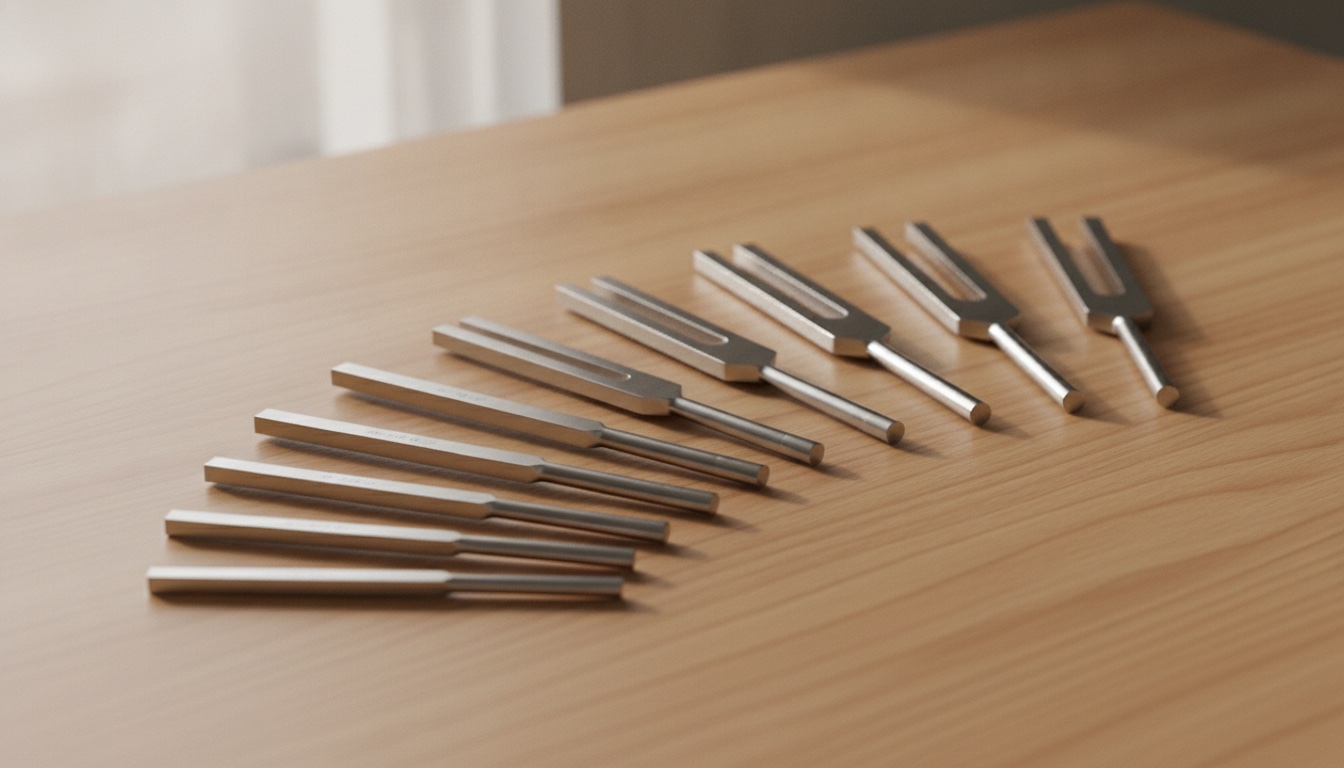 All frequencies at a glance Drag the slider, watch the sound figures, compare the cent distances. Open page →
 396 Hz Solfeggio narrative: Letting Go Open page →
 417 Hz Solfeggio narrative: Change Open page →
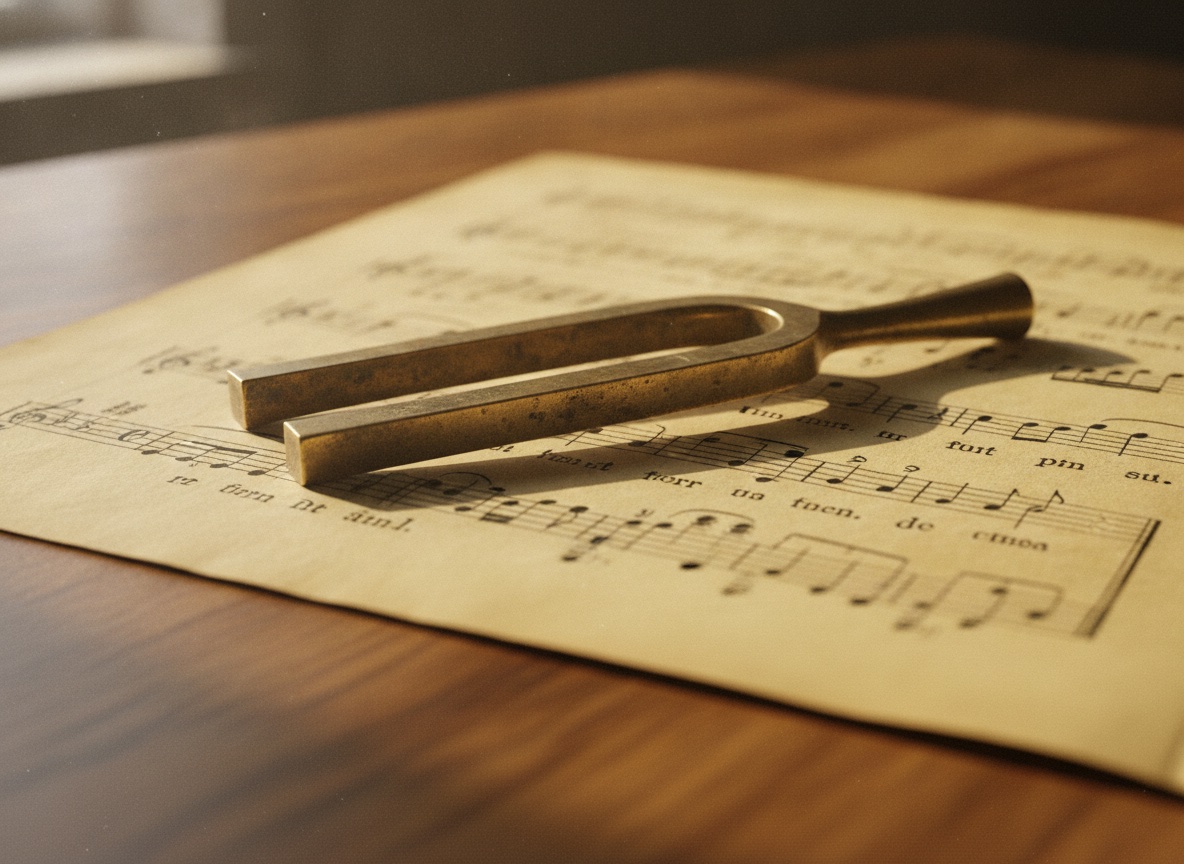 432 Hz Verdi Tuning Open page →
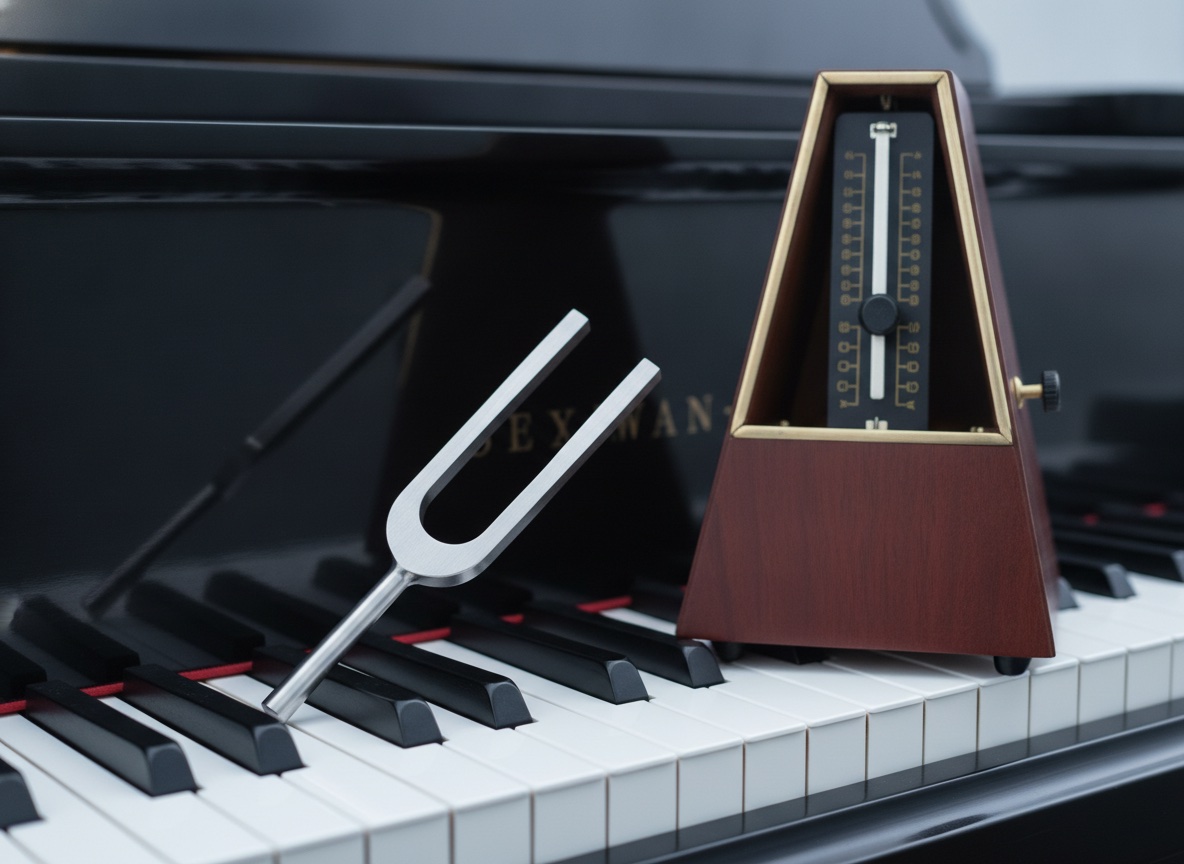 440 Hz Concert Pitch, ISO 16 Open page →
 444 Hz A Shade Brighter Open page →
 528 Hz Solfeggio narrative: Love, Transformation Open page →
 639 Hz Solfeggio narrative: Connection Open page →
 741 Hz Solfeggio narrative: Expression Open page →
 852 Hz Solfeggio narrative: Intuition Open page →
 963 Hz Solfeggio narrative: Unity Open page →
Now hear it yourself.
You know the theory now. Whether you hear the difference is for you to decide — right in the demo.